“Many clever men like you have trusted to civilization. Many clever Babylonians, many clever Egyptians, many clever men at the end of Rome. Can you tell me, in a world that is flagrant with the failures of civilization, what there is particularly immortal about yours?”
--G.K. Chesterton, The Napoleon of Notting Hill (1904)
We at Myrtle’s place do not believe in the cynical philosophies of survivalists, nor do we believe in the fatalist philosophies of nihilists. Neither, however, do we believe in the supremacy of human beings central to the dominant moral, social, and economic philosophies of the Judeo-Christian capitalist West.
People are great – don’t get us wrong. It’s just that we aren’t the center of the universe, as you would be led to believe if you follow the teachings key to the ideological structures underpinning most of what we recognize as “civilization”. There is a dichotomy in most systems of thought between “natural” and “man-made”. We do not make that distinction. As far as we are concerned… it’s all“natural” and is all subject to the immutable laws of physics.

In fact, in the World According to Myrtle, the inevitable truth of everything being interconnected is so obvious that we sometimes don’t think about the fact that not everyone shares this basic understanding. Which is why we are so often astounded by things like global-warming-denialism, trust in petrochemical companies, and big grassy lawns.
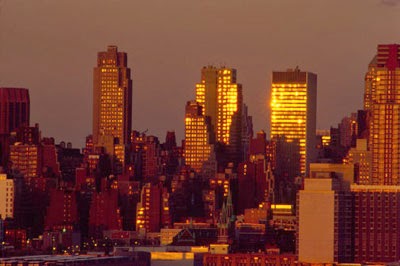
One of the basic facts of life regarding how so-called “civilization” fits in to the natural world is something called the urban heat island, and though the concept has been around since the first decade of the 1800s, when an intrepid investigator named Luke Howard first described the phenomenon of cities being warmer than the surrounding countryside, there is a surprisingly large percentage of the modern population that is utterly unfamiliar with the idea.
Basically, not only do cities generate more “man-made” heat (though, again, we think this term is preposterous) than do areas outside the urban center, cities also retain more heat, owing to 1) more materials with heat retaining properties, such as asphalt, cement, insulating materials in houses and commercial properties, vertical structures with large volumes of retained non-externally-circulated air (i.e. “buildings”); 2) fewer radiating surfaces such as open fields, tall trees with upward-facing surfaces of high albedo (i.e., glossy leaves); 3) numerous heat-generating entities such as power plants, automobiles, street lamps, etc. and 4) lots of houses with central heat in winter, and air conditioners in summer (which, since most people are short-sighted, they don’t realize put out more heat than cold, only the heat goes outside, not in).
 There are a number of secondary effects generated by heat islands, most of which people simply choose to ignore. Monthly rainfall, for example, is much higher downwind from most cities, in large measure because the urban heat island effect causes a change in the windflow around cities. In Bryan-College Station, people sometimes humorously refer to the “Aggie Dome” which causes large storm systems to “magically” break up shortly before hitting the city-proper, only to reform once they move South and East of town. Guess what? It’s not magic… it’s civilization. The “Aggie Dome” is a locally obvious manifestation of a very well known scientific principle. It is a real thing, and it is a direct response of the environment to the activities of human beings.
Conservative blogosphere types frequently decry the possibility of macroscopic versions of this same phenomenon – to wit, they refuse to accept the possibility of anthropogenic climate change – but this strikes us at Myrtle’s place as not only wrong, but downright infantile. Of course humans have an impact on the environment. Everything has an impact on the environment, and the last time we checked, human beings are a subset of “everything”. We promise we will update you the first time we encounter any evidence to the contrary.
The only question is not “do we have an impact on the environment” but “how big an impact do we have?” There is certainly plenty of room to discuss this question on the macro level (we have done so before, and will unquestionably do so again), but equally important, we think, is a discussion of the micro level, which generally goes unexamined. Regardless of what is going on in the climate generally – and rest assured, that is certainly a massive question – what is going on in the microclimates of individual human habitations is just as important.

So, to begin with: what causes the urban heat island? Long story short, the principle cause is the fact that short-wave radiation absorbed during the day by asphalt, concrete and buildings of wood, glass, ceramic, and various other modern construction materials is released as long-wave radiation during the night, making cooling a much slower process in urban areas than in the pastoral surroundings. Basically, stuff people build generally cools down more slowly than stuff Mother Nature built. There are plenty of counterexamples, but basically the “slow-to-cool-down” stuff in nature is concentrated in the hands of homo sapiens because we feel more comfortable in houses and office buildings made out of such stuff, and such stuff is also easier to drive on/more resilient to store still-other-stuff on.
What are the impacts of this basic reality? First, night time temperatures in the city are mostly higher than they are in the country. The people to first notice this truth are gardeners… especially tomato gardeners. Fruit set for virtually all vegetables, but for tomatoes in particular, depends upon sufficiently warm day time temperatures for energy creation (critical for growth and development) coupled with night time temperatures low enough for consolidation of sugars (a process in large measure dependent upon the differences in fluidity of various chemical components at different temperature gradients which then utilize gravity – basically, the stuff that solidifies at lower temperatures sinks faster than the stuff that solidifies at higher temperatures) in order to create a “fruit” (aka a tomato) which has the proper nutritional value to ensure the germination of its progeny (aka a seed).
 As finicky as tomatoes are, it becomes apparent quite quickly to connoisseurs that Fall tomatoes taste better than Summer tomatoes in the Brazos Valley, because while the daytime temperatures stay high enough well into the Fall… during the Spring and Summer, the night time temperatures get too high far too quickly. Sure, the plants still set fruit… but the flavor is just, well… wrong. And it’s wrong because it’s too hot at night.
There are other, more dramatic impacts, of course. You will occasionally hear stories of large tornadoes hitting urban areas. However… your everyday, ordinary garden-variety tornado almost never hits an urban area. The trailer park on the edge of town, sure. But town square? No way!
Why?
Because small thunderstorms almost never happen in urban areas. The urban heat sink causes lower-level temperature inversions that most cumulonimbus constructs simply cannot penetrate – they hit the heat island and “poof!” The system may (if it is strong enough) recreate itself once it moves past the interfering heat source (see: “Dome, Aggie”), but otherwise it just disappears in a puff of disappointed agricultural chappiness. Only a very large storm system is likely to be able to penetrate the urban heat island, and as a consequence only a very large tornado is likely to impact an urban environment.
So… what should people do about this phenomenon that we have created?
The answer to this question depends upon the answer to a vast number of other questions, not least of which is “What do we want?”
.png)
If what we want is to control nature, then, hey, do whatever you want. You’re not going to succeed, so you may as well go down swinging with whatever ridiculous philosophy you were wanting to pursue in the first place. If you’re going to be a failure, you should at least be a self-satisfied failure.
If, on the other hand, what we seek is a way to live in a more sensible, survivable equilibrium, then there are several steps we can take, some of which have plenty of empirical support, and others of which make good sense based on what we know about the laws of physics, in addition to several decades of meteorological evidence.
One of the first cities in North America to take this problem seriously was Atlanta, Georgia, which in the 1990s instituted several statutes related to building and development aimed at lowering the urban temperature. Rooftops and roadways in Atlanta must be built of certain materials and of certain colors which increased the city’s albedo considerably. White or grey replaced black and brown… and the citywide average temperature dropped by nearly 3° Fahrenheit over a decade. Given that during that same decade the global average daily temperature rose… yeah, Atlanta was on to something.
 In addition to cool roofs (about which we have written before – if you haven’t yet painted your roof white, hey, get on it!), cool road surfaces, permeable asphalt, increased greenways, replacing lawns with herb gardens, shrubberies, and tall trees (capable of both absorbing heat, and reflecting any unused solar energy so as to avoid heat pollution) are all effective mediators of urban heat. Replacing combustion engines with electric vehicles is another obvious reduction urban dwellers can implement… and better still, getting rid of engines altogether (also known as “ride your bike to work, ya bum!”)
Sometimes we are accused by traditionalists of taking glee in the idea that Western civilization is going to crumble. Note that we didn’t say in the possibility that Western civilization will crumble – that is an inevitability, as an serious student of history would know.
Well… we have to confess to being more or less guilty to this charge. The thing is, the fall of one form of civilization has always led to the institution of another. And we are not pessimists, focused on what we will be losing when the status quo comes to its inevitable conclusion.
No, we are optimists. We see that the way of life to which the vast majority of our species has become accustomed is unsustainable, and cannot last. And we look at the possibilities and realize… you know what? We can do better.
In fact, we are quite sure that, even though we’ll be dragged there kicking and screaming, humanity will do better.
Happy farming!
People are great – don’t get us wrong. It’s just that we aren’t the center of the universe, as you would be led to believe if you follow the teachings key to the ideological structures underpinning most of what we recognize as “civilization”. There is a dichotomy in most systems of thought between “natural” and “man-made”. We do not make that distinction. As far as we are concerned… it’s all“natural” and is all subject to the immutable laws of physics.
In fact, in the World According to Myrtle, the inevitable truth of everything being interconnected is so obvious that we sometimes don’t think about the fact that not everyone shares this basic understanding. Which is why we are so often astounded by things like global-warming-denialism, trust in petrochemical companies, and big grassy lawns.
One of the basic facts of life regarding how so-called “civilization” fits in to the natural world is something called the urban heat island, and though the concept has been around since the first decade of the 1800s, when an intrepid investigator named Luke Howard first described the phenomenon of cities being warmer than the surrounding countryside, there is a surprisingly large percentage of the modern population that is utterly unfamiliar with the idea.
Basically, not only do cities generate more “man-made” heat (though, again, we think this term is preposterous) than do areas outside the urban center, cities also retain more heat, owing to 1) more materials with heat retaining properties, such as asphalt, cement, insulating materials in houses and commercial properties, vertical structures with large volumes of retained non-externally-circulated air (i.e. “buildings”); 2) fewer radiating surfaces such as open fields, tall trees with upward-facing surfaces of high albedo (i.e., glossy leaves); 3) numerous heat-generating entities such as power plants, automobiles, street lamps, etc. and 4) lots of houses with central heat in winter, and air conditioners in summer (which, since most people are short-sighted, they don’t realize put out more heat than cold, only the heat goes outside, not in).

Conservative blogosphere types frequently decry the possibility of macroscopic versions of this same phenomenon – to wit, they refuse to accept the possibility of anthropogenic climate change – but this strikes us at Myrtle’s place as not only wrong, but downright infantile. Of course humans have an impact on the environment. Everything has an impact on the environment, and the last time we checked, human beings are a subset of “everything”. We promise we will update you the first time we encounter any evidence to the contrary.
The only question is not “do we have an impact on the environment” but “how big an impact do we have?” There is certainly plenty of room to discuss this question on the macro level (we have done so before, and will unquestionably do so again), but equally important, we think, is a discussion of the micro level, which generally goes unexamined. Regardless of what is going on in the climate generally – and rest assured, that is certainly a massive question – what is going on in the microclimates of individual human habitations is just as important.

So, to begin with: what causes the urban heat island? Long story short, the principle cause is the fact that short-wave radiation absorbed during the day by asphalt, concrete and buildings of wood, glass, ceramic, and various other modern construction materials is released as long-wave radiation during the night, making cooling a much slower process in urban areas than in the pastoral surroundings. Basically, stuff people build generally cools down more slowly than stuff Mother Nature built. There are plenty of counterexamples, but basically the “slow-to-cool-down” stuff in nature is concentrated in the hands of homo sapiens because we feel more comfortable in houses and office buildings made out of such stuff, and such stuff is also easier to drive on/more resilient to store still-other-stuff on.
What are the impacts of this basic reality? First, night time temperatures in the city are mostly higher than they are in the country. The people to first notice this truth are gardeners… especially tomato gardeners. Fruit set for virtually all vegetables, but for tomatoes in particular, depends upon sufficiently warm day time temperatures for energy creation (critical for growth and development) coupled with night time temperatures low enough for consolidation of sugars (a process in large measure dependent upon the differences in fluidity of various chemical components at different temperature gradients which then utilize gravity – basically, the stuff that solidifies at lower temperatures sinks faster than the stuff that solidifies at higher temperatures) in order to create a “fruit” (aka a tomato) which has the proper nutritional value to ensure the germination of its progeny (aka a seed).

There are other, more dramatic impacts, of course. You will occasionally hear stories of large tornadoes hitting urban areas. However… your everyday, ordinary garden-variety tornado almost never hits an urban area. The trailer park on the edge of town, sure. But town square? No way!
Why?
Because small thunderstorms almost never happen in urban areas. The urban heat sink causes lower-level temperature inversions that most cumulonimbus constructs simply cannot penetrate – they hit the heat island and “poof!” The system may (if it is strong enough) recreate itself once it moves past the interfering heat source (see: “Dome, Aggie”), but otherwise it just disappears in a puff of disappointed agricultural chappiness. Only a very large storm system is likely to be able to penetrate the urban heat island, and as a consequence only a very large tornado is likely to impact an urban environment.
So… what should people do about this phenomenon that we have created?
The answer to this question depends upon the answer to a vast number of other questions, not least of which is “What do we want?”
.png)
If what we want is to control nature, then, hey, do whatever you want. You’re not going to succeed, so you may as well go down swinging with whatever ridiculous philosophy you were wanting to pursue in the first place. If you’re going to be a failure, you should at least be a self-satisfied failure.
If, on the other hand, what we seek is a way to live in a more sensible, survivable equilibrium, then there are several steps we can take, some of which have plenty of empirical support, and others of which make good sense based on what we know about the laws of physics, in addition to several decades of meteorological evidence.
One of the first cities in North America to take this problem seriously was Atlanta, Georgia, which in the 1990s instituted several statutes related to building and development aimed at lowering the urban temperature. Rooftops and roadways in Atlanta must be built of certain materials and of certain colors which increased the city’s albedo considerably. White or grey replaced black and brown… and the citywide average temperature dropped by nearly 3° Fahrenheit over a decade. Given that during that same decade the global average daily temperature rose… yeah, Atlanta was on to something.

Sometimes we are accused by traditionalists of taking glee in the idea that Western civilization is going to crumble. Note that we didn’t say in the possibility that Western civilization will crumble – that is an inevitability, as an serious student of history would know.
Well… we have to confess to being more or less guilty to this charge. The thing is, the fall of one form of civilization has always led to the institution of another. And we are not pessimists, focused on what we will be losing when the status quo comes to its inevitable conclusion.
No, we are optimists. We see that the way of life to which the vast majority of our species has become accustomed is unsustainable, and cannot last. And we look at the possibilities and realize… you know what? We can do better.
In fact, we are quite sure that, even though we’ll be dragged there kicking and screaming, humanity will do better.
Happy farming!


 Posts
Posts


